
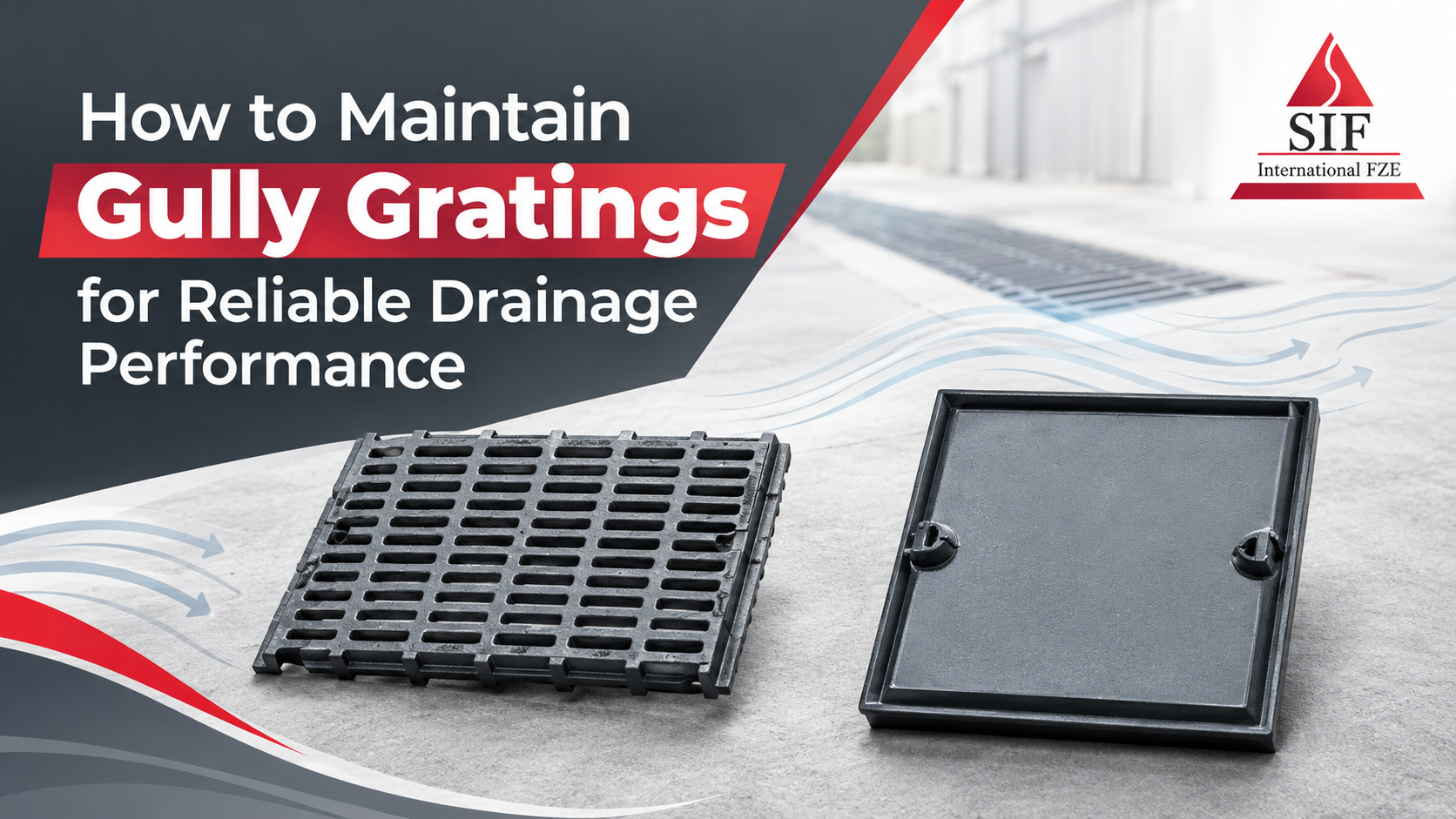
Gully gratings play an important role in keeping roads, parking areas, footpaths and commercial developments free from unwanted surface water. They allow rainwater and runoff to enter the drainage system while helping prevent larger debris from entering the gully. However, even a well-designed grating cannot perform effectively if its openings become blocked, its frame becomes unstable or the surrounding drainage system is poorly maintained.
In Dubai, where infrastructure must accommodate seasonal rainfall, dust, sand and everyday urban activity, regular drainage inspections are an important part of property and infrastructure maintenance. Sand accumulation, litter, leaves and other debris can restrict water flow, increasing the risk of localised waterlogging during heavy rainfall.
For facility managers, contractors and property owners, understanding how to maintain gully gratings can help preserve drainage performance, identify developing problems and reduce avoidable repair costs. When selecting products from Gully gratings Suppliers in Dubai, it is equally important to consider the suitability of the grating for its installation environment and the maintenance requirements associated with its design.
Why Is Regular Gully Grating Maintenance Important?
A gully grating is part of a wider drainage arrangement that includes the frame, gully chamber, connecting pipes and downstream drainage network. If any of these components becomes obstructed or damaged, the system may not remove surface water as intended.
Regular maintenance helps identify problems before they become more disruptive. For example, a small accumulation of sand around a roadside gully may be easy to remove during routine cleaning. If it is left unattended, additional debris can collect around the openings and reduce the amount of water entering the drainage system.
Maintenance also helps identify structural issues. A loose frame, cracked grating or damaged seating surface may affect stability and create a safety concern for pedestrians or vehicles.
For commercial properties, residential communities and public infrastructure, a planned inspection and cleaning schedule is generally more effective than waiting until drainage performance visibly deteriorates.
1. Inspect Gully Gratings Regularly
The first step in maintaining reliable drainage performance is to establish a routine inspection programme. The inspection frequency should reflect the location, surrounding conditions, drainage demand and history of blockages.
Roadside gratings exposed to traffic, windblown sand and street litter may need more frequent attention than those in sheltered areas. Gratings near landscaped areas may also collect leaves, soil and plant debris.
During an inspection, check whether the openings are clear and whether water can enter the gully without an obvious obstruction. Look for visible cracks, deformation, corrosion where applicable, displaced frames or signs that the grating is rocking under normal contact.
The surrounding pavement or kerb should also be examined. Damaged surfaces, settlement or changes in levels can affect how water reaches the drainage inlet.
If a grating appears unstable or structurally damaged, restrict access to the affected area where necessary and arrange an assessment by a qualified maintenance professional. A damaged cover should not be left in service simply because water can still pass through it.
2. Remove Sand, Silt and Surface Debris
Sand and fine sediment are common maintenance concerns in outdoor drainage systems. Windblown material can collect around gully openings, while runoff may carry soil, litter and other debris towards the inlet.
When these materials accumulate, they can reduce the effective open area of the grating and prevent surface water from entering the drainage system efficiently.
Routine cleaning should remove visible sand, leaves, paper, plastic and other suitable-to-remove debris from the grating surface and immediate surrounding area. Use appropriate tools and follow the site's maintenance and waste-handling procedures.
Where sediment has accumulated inside the gully chamber, a more thorough cleaning may be required. This should be carried out by trained personnel using appropriate equipment and procedures.
Cleaning the visible grating alone may not resolve the problem if the chamber or connecting pipe is also obstructed. If water continues to drain slowly after surface debris has been removed, the downstream drainage system may need further inspection.
3. Check for Blockages After Rainfall
Inspections following significant rainfall can help reveal drainage problems that may not be obvious during dry weather.
Look for standing water around the gully, sediment deposited near the openings, debris trapped against the grating or evidence that runoff is bypassing the inlet. These signs may indicate that the grating is obstructed, the inlet capacity is insufficient for the conditions or another part of the drainage network is restricted.
If the same location repeatedly experiences water accumulation, investigate the underlying cause rather than relying solely on repeated surface cleaning.
Possible causes include an undersized or poorly positioned inlet, sediment buildup inside the chamber, a blocked connecting pipe or inadequate drainage capacity for the surrounding catchment. A qualified drainage engineer can help determine which issue is responsible.
For infrastructure projects in Dubai, this type of inspection can provide useful information for improving maintenance plans and identifying locations that require further investigation.
4. Examine the Grating, Frame and Seating Area
Reliable drainage depends on more than open slots. The grating must also sit correctly within its frame and remain suitable for the loads imposed by its installation location.
During maintenance, check for visible cracks, broken sections, excessive wear, loose fittings and signs of movement. Examine the frame and surrounding concrete or pavement for damage that could affect the grating's support.
A grating that rocks, sits unevenly or produces unusual movement under normal conditions should be assessed promptly. These symptoms may indicate damaged seating surfaces, frame deterioration, installation defects or a mismatch between the grating and frame.
Do not attempt to resolve structural instability by placing loose materials beneath the grating or using improvised supports. Repairs should follow the manufacturer's instructions and the requirements of the responsible engineer.
Where replacement is necessary, the new product should match the required dimensions, frame arrangement and load classification. Selecting a replacement based only on appearance can lead to compatibility and safety problems.
5. Check Corrosion and Surface Deterioration
The rate and type of deterioration depend on the material, surface treatment, surrounding environment and maintenance conditions. Outdoor drainage components may be exposed to moisture, contaminants, cleaning chemicals and other substances that affect their condition.
During inspections, look for visible corrosion, surface deterioration, damaged coatings where applicable and any changes that could affect structural integrity.
Not every surface mark indicates a serious defect, but significant material loss, cracking or deterioration around load-bearing areas requires closer assessment. Cleaning or applying a surface treatment cannot restore structural capacity to a severely damaged component.
When selecting replacement products, buyers should confirm the specified material and any protective finish required for the installation environment. Reputable Gully gratings Suppliers in Dubai should be able to explain the available product specifications and provide relevant technical information for evaluation.
Maintenance decisions should be based on the actual condition of the grating rather than an assumption that all products have the same service life.
6. Keep the Drainage Openings Clear Without Damaging the Grating
Cleaning should restore drainage flow without damaging the product or creating additional hazards.
Use tools and cleaning methods appropriate for the grating material and design. Avoid striking the grating with heavy tools, applying unsuitable chemicals or using excessive force that could damage the frame, coating or surrounding structure.
Where mechanical cleaning or high-pressure equipment is required, the maintenance team should follow suitable operating procedures and any relevant manufacturer guidance.
The grating should be returned to its correct position after cleaning, with all specified securing arrangements properly restored. An incorrectly seated grating can create a trip hazard or become unstable under traffic.
If the grating must be removed to clean the chamber, the work should be performed by trained personnel using appropriate lifting equipment and access controls. Underground drainage chambers may present serious hazards, including restricted access and potentially hazardous atmospheres. Personnel should not enter a chamber unless the required confined-space assessment, permits and safety procedures are in place.
7. Establish a Preventive Maintenance Schedule
A preventive maintenance schedule helps ensure that inspections and cleaning are completed before minor problems develop into more serious drainage issues.
The schedule should be based on site conditions, the amount of debris collected, the consequences of a blockage and the performance observed during previous inspections. High-risk locations may require more frequent checks, especially before forecast heavy rainfall or after events that introduce large amounts of debris.
Maintenance records should identify the location inspected, the condition of the grating, the work completed and any defects requiring further action. Recording repeated blockages or recurring structural problems can help maintenance teams identify patterns and prioritise repairs.
For large residential communities, commercial developments and road networks, a documented maintenance programme can also help property managers coordinate contractors, monitor outstanding defects and plan replacement work.
8. Choose the Right Gully Grating to Reduce Maintenance Problems
Maintenance is important, but the original product selection also affects how a drainage inlet performs over time.
A grating should be selected according to the expected traffic loads, required dimensions, drainage arrangement and installation environment. The slot design and effective open area should be appropriate for the application, while the frame must provide suitable support and compatibility with the surrounding structure.
A grating installed in a vehicle-accessible area should have the required load classification for that location. Similarly, a product intended for a specific gully chamber must fit the approved opening and frame arrangement.
Buyers comparing Gully gratings Suppliers in Dubai should review product specifications and confirm that the proposed grating meets the project's technical requirements. Depending on the project, this may include applicable EN 124 documentation, load-test evidence, material details and dimensioned drawings.
Choosing a suitable product will not eliminate the need for cleaning, but it can help avoid problems caused by incorrect dimensions, unsuitable load ratings or inappropriate installation.
Common Signs That a Gully Grating Needs Attention
Standing water around the inlet, recurring blockages, visible cracks, a loose or rocking frame, damaged seating surfaces and significant deterioration are all reasons to arrange an inspection.
The appropriate response depends on the problem. Surface debris may require routine cleaning, while persistent slow drainage may indicate an obstruction within the chamber or pipework. Structural damage or an unstable grating requires a more urgent assessment and may necessitate restricting access until the area is made safe.
Maintenance teams should investigate repeated problems rather than treating every incident as an isolated blockage. Identifying the underlying cause can help prevent the same issue from returning.
How SIF International FZE Supports Gully Grating Selection
Selecting the right drainage product begins with understanding the project's requirements. Contractors, consultants and procurement teams should identify the installation location, dimensions, expected loads and relevant technical specifications before requesting a quotation.
SIF International FZE serves the UAE market with infrastructure-related products, including gully gratings and other drainage solutions. Providing clear project information at the enquiry stage helps buyers and suppliers establish the product specifications that need to be reviewed.
When comparing Gully gratings Suppliers in Dubai, buyers should consider technical suitability, dimensional compatibility and the availability of appropriate product documentation alongside commercial factors.
A suitable grating, correctly installed and maintained according to its design and operating conditions, forms an important part of a dependable surface drainage system.
Conclusion
Maintaining gully gratings is essential for keeping surface drainage systems clear, stable and functional. Regular inspections, removal of sand and debris, post-rainfall checks, structural assessments and preventive maintenance can help identify problems before they cause more significant disruption.
However, effective maintenance also depends on selecting the right product for the application. Material, load classification, dimensions, frame compatibility and installation conditions should all be considered before a grating is purchased or replaced.
For contractors, property managers and infrastructure professionals evaluating Gully gratings Suppliers in Dubai, combining appropriate product selection with a planned maintenance programme can support more reliable drainage performance and help reduce avoidable repairs over the life of the installation.
Frequently Asked Questions
1. How often should gully gratings be cleaned?
The cleaning frequency depends on the location, debris accumulation, drainage demand and previous blockage history. Gratings exposed to sand, litter or heavy runoff may need more frequent cleaning. Regular inspections help determine a suitable schedule for each site.
2. What are the common causes of blocked gully gratings?
Common causes include sand, silt, leaves, litter and other debris accumulating over the openings or inside the drainage chamber. Blockages can also occur farther downstream in connecting pipes. If cleaning the surface does not restore normal drainage, the wider system should be inspected.
3. How can I tell if a gully grating needs replacement?
Visible cracks, broken sections, significant deterioration, deformation, persistent instability or damage affecting the load-bearing area may indicate that replacement is necessary. A qualified professional should assess the condition and confirm the appropriate repair or replacement option.
4. Which gully grating is suitable for roads and parking areas in Dubai?
The correct product depends on the expected traffic loads, installation location, required dimensions and project specifications. Vehicle-accessible areas generally require a grating with an appropriate load classification. The responsible engineer should confirm the required class and compatibility with the supporting frame.
5. How can I choose reliable Gully gratings Suppliers in Dubai?
Compare suppliers based on product specifications, material, load classification, dimensional compatibility and the availability of relevant technical documentation. Confirm that the proposed grating suits the intended application and that its installation and maintenance requirements are understood before placing an order.