
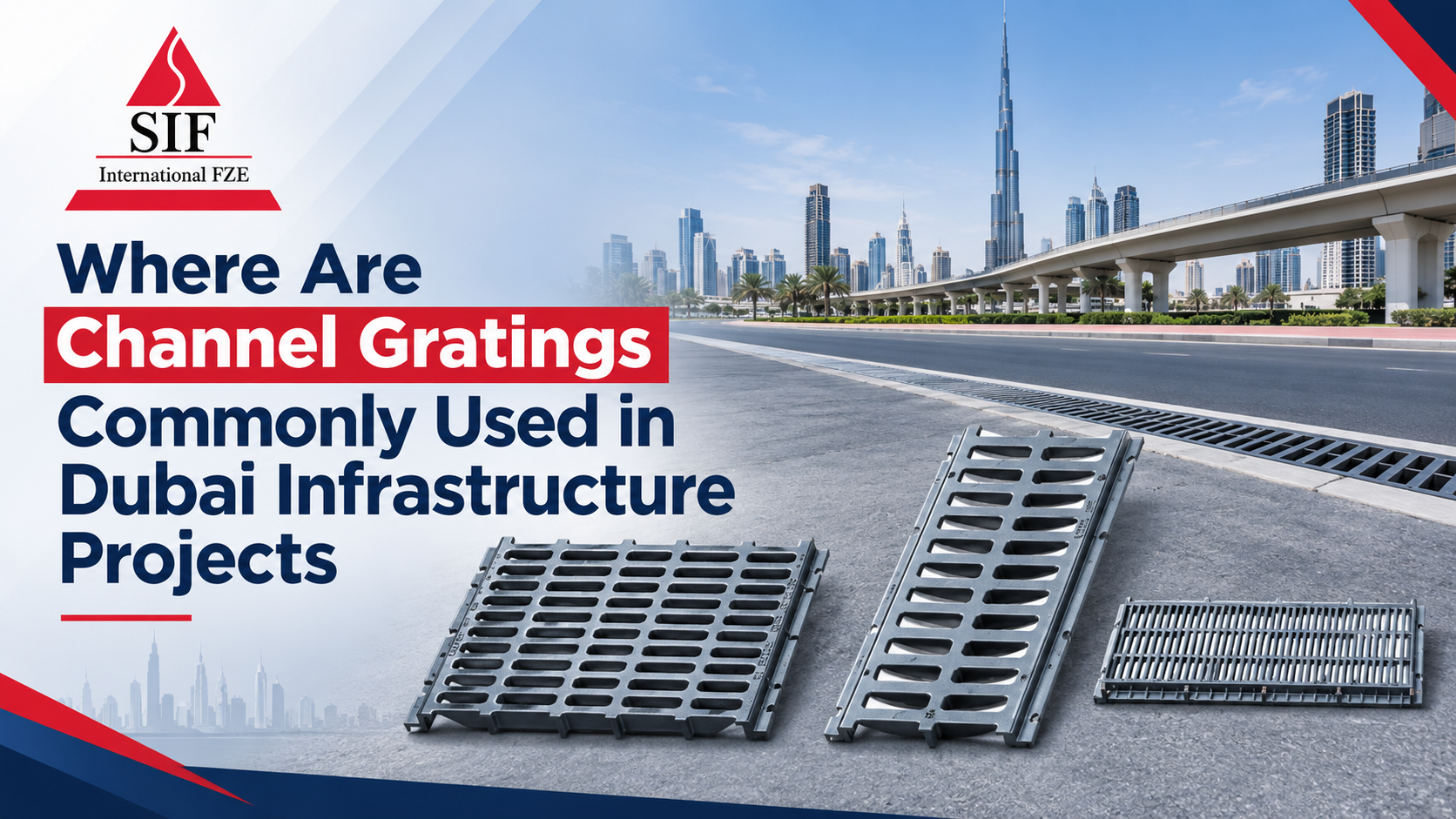
Dubai’s rapid development has increased the need for reliable drainage systems across residential communities, commercial buildings, roads, industrial facilities, and public spaces. Although drainage channels are often overlooked during project planning, they play an important role in collecting surface water and directing it towards suitable drainage outlets. Channel gratings cover these drainage channels while allowing water to enter the system.
For contractors, consultants, developers, and procurement teams, selecting the right grating involves more than choosing a suitable size or design. The product must match the expected traffic load, drainage requirements, installation conditions, and long-term maintenance needs of the project.
As a supplier serving the UAE market, SIF International FZE understands the importance of selecting channel gratings according to the practical requirements of each application. This guide explains where channel gratings are commonly used in Dubai infrastructure projects and what buyers should consider when specifying them.
What Are Channel Gratings and Why Are They Important?
Channel gratings are protective covers fitted over linear drainage channels. Their openings allow surface water to flow into the drainage system while helping prevent larger debris from entering. Depending on the design, they can also provide a stable surface for pedestrians and vehicles moving across the drainage line.
In Dubai, channel gratings are used in areas where surface water needs to be collected efficiently, including paved spaces, access roads, parking facilities, service areas, and landscaped developments. The appropriate design depends on the expected water flow, loading conditions, installation depth, and surrounding surface.
When comparing Channel Gratings Suppliers in Dubai, buyers should evaluate whether the recommended product is suitable for the actual site conditions rather than relying on appearance or price alone.
1. Roads and High-Traffic Areas
Road infrastructure is one of the most important applications for channel drainage systems. Roads, access lanes, and paved junctions can experience surface water accumulation during rainfall, particularly where the road profile directs water towards a drainage channel.
Channel gratings installed in these areas help collect runoff and guide it into the drainage network. However, road applications require careful product selection because the grating may be exposed to repeated vehicle loads, including heavier commercial traffic.
The grating’s load-bearing capacity, frame compatibility, secure seating, and resistance to movement should be considered during specification. Engineers should select a suitable load class based on the location and anticipated traffic, using the relevant project requirements and applicable standards.
For road and infrastructure developments, Channel Gratings Suppliers in Dubai should be able to help buyers identify products that match the intended application and technical specifications.
2. Commercial Buildings and Shopping Centres
Commercial properties often include entrances, pedestrian walkways, loading zones, service corridors, and outdoor paved areas. These locations require drainage solutions that manage surface water without creating unnecessary obstacles for visitors or building operations.
Channel gratings can be installed along building perimeters, near suitable paved transitions, and across designated drainage points where water tends to collect. In shopping centres and mixed-use developments, the grating design should suit the surrounding flooring and expected pedestrian or vehicle movement.
The appearance of the grating may also matter in customer-facing areas. A neat finish, consistent alignment, and secure installation can help maintain the overall quality of the external environment.
For these projects, selection should balance drainage performance, durability, accessibility, and the appearance required by the architectural design.
3. Residential Communities and Villa Developments
Dubai’s residential developments include villas, apartment complexes, shared driveways, internal roads, courtyards, and landscaped areas. Each of these spaces may have different drainage requirements depending on the ground slope and the type of surface installed.
Channel gratings can be positioned along driveways, at garage entrances, beside paved courtyards, and around other designated surface-water collection points. In residential settings, the system must collect runoff effectively while remaining suitable for everyday pedestrian and vehicle use.
A grating designed for a pedestrian walkway may not be appropriate for a driveway used by cars or delivery vehicles. Buyers should therefore confirm the expected loading conditions before ordering.
Choosing the right product at the planning stage can help reduce drainage problems, premature damage, and avoidable maintenance costs after the development becomes occupied.
4. Parking Areas and Vehicle Access Zones
Parking facilities are another common application for channel drainage systems. Surface water can collect across parking bays, vehicle ramps, entry and exit lanes, and circulation routes if the drainage layout is not properly planned.
Channel gratings help collect runoff along designated drainage lines. In parking areas, the choice of grating must reflect the types of vehicles using the facility, the direction of traffic, and the position of the drainage channel.
A grating installed across a frequently used vehicle route may need a different load rating from one placed in a pedestrian-only section. Frame support and installation quality are equally important because uneven seating or movement can affect both performance and safety.
When sourcing products from Channel Gratings Suppliers in Dubai, contractors should provide clear details about the installation location, anticipated traffic, channel dimensions, and project specifications.
5. Industrial Facilities and Warehouses
Industrial developments and warehouses often feature loading bays, service roads, vehicle circulation areas, and external paved yards. These environments may experience substantial traffic from trucks, forklifts, and delivery vehicles, depending on the site layout.
Channel gratings can be used in designated drainage areas where surface runoff needs to be collected without interrupting routine operations. The product specification should account for the expected loads and the conditions in which the grating will operate.
In certain industrial settings, buyers may also need to consider exposure to oils, chemicals, cleaning agents, or other substances. The suitability of the grating material and finish should be assessed against the actual operating environment.
For this reason, product selection should involve the project engineer or responsible technical team when unusual loading or exposure conditions are expected.
6. Hotels, Resorts, and Outdoor Leisure Areas
Hotels, resorts, recreational facilities, and outdoor dining spaces require drainage systems that complement the design of the surrounding environment. Channel gratings may be installed near paved walkways, external seating areas, service zones, and other locations where surface water needs to be controlled.
In these applications, drainage performance is important, but so are pedestrian comfort and visual consistency. Grating openings should be suitable for the intended users and surrounding surface, while the installation should avoid unnecessary trip hazards or unstable edges.
Areas exposed to frequent cleaning or moisture may also require materials and finishes appropriate for those conditions. The product should be selected according to the specific application rather than assuming that one design will suit every outdoor space.
7. Public Walkways and Pedestrian Areas
Pedestrian routes around public buildings, community facilities, transport-related developments, and landscaped spaces may incorporate linear drainage channels to manage runoff.
Channel gratings in these locations should provide suitable drainage openings without compromising safe movement. The opening pattern, surface finish, alignment, and stability should be assessed according to the needs of the site.
Where wheelchairs, mobility aids, luggage, or small-wheeled equipment may be used, designers should also consider accessibility requirements and the potential for wheels or walking aids to become caught in the openings.
These details are particularly important in public areas, where a drainage product must perform effectively while remaining suitable for a wide range of users.
8. Landscaping and External Paved Areas
Landscaped developments frequently combine paving, planting beds, pedestrian routes, and changes in ground level. Water may accumulate where these surfaces meet, making planned drainage an important part of the overall landscape design.
Channel gratings can be installed along paved borders, near designated collection points, or where the site layout directs runoff towards a drainage channel. The design should complement the surrounding surface while allowing water to enter the system efficiently.
Debris management is also important in landscaped areas. Leaves, soil, sand, and small pieces of organic material can collect around the grating and reduce the effective drainage area if regular cleaning is neglected.
The selected product should therefore be easy to inspect and maintain, with a design suitable for the expected debris and water flow.
How to Choose the Right Channel Grating for a Dubai Project
The right channel grating depends on the location and the conditions in which it will be used. Before placing an order, buyers should confirm the channel dimensions, the required load class, the material, the drainage requirements, and the method of installation.
Dubai’s environment also makes maintenance planning important. Dust and sand can accumulate around drainage openings, while intense rainfall can expose weaknesses in drainage capacity or site grading. Regular inspection and debris removal help keep the system operating as intended.
Project teams should check whether the product complies with the specifications and standards applicable to their project. Where a recognised load classification or test documentation is required, the relevant evidence should be reviewed before approval.
Working with experienced Channel Gratings Suppliers in Dubai can make product evaluation more straightforward by helping buyers compare suitable designs and confirm technical details before procurement.
Why Consider SIF International FZE?
SIF International FZE serves the UAE market with drainage and infrastructure product solutions. For contractors, consultants, and procurement teams planning projects in Dubai, choosing a suitable channel grating starts with understanding the application rather than selecting a product based on price alone.
When discussing project requirements with SIF International FZE, buyers should share the intended installation location, channel dimensions, expected traffic loads, and any relevant technical specifications. These details help establish which product options may be suitable for further technical review.
Whether the project involves a commercial development, a residential community, a parking facility, or an industrial site, the grating should be selected to match the project’s actual operating conditions.
Conclusion
Channel gratings support surface-water management across many types of Dubai infrastructure projects. They are commonly used in roads, commercial buildings, residential developments, parking facilities, industrial sites, public walkways, hospitality environments, and landscaped areas.
Although the basic purpose remains the same, the technical requirements can differ significantly between applications. Traffic loads, drainage capacity, material suitability, accessibility, and maintenance needs all influence the final specification.
For buyers comparing Channel Gratings Suppliers in Dubai, the most effective approach is to define the site requirements clearly and confirm that the selected product matches the project specification. SIF International FZE can be considered as part of that procurement process when evaluating channel grating solutions for UAE infrastructure projects.
Frequently Asked Questions
1. Where are channel gratings commonly used in Dubai?
Channel gratings are commonly used in roads, parking areas, commercial buildings, residential communities, industrial facilities, public walkways, hotels, and landscaped developments where surface water needs to enter a drainage channel.
2. Which channel gratings are suitable for road projects?
The suitable grating depends on the expected traffic and installation location. Roadways exposed to heavy vehicles generally require a higher load capacity than pedestrian-only areas. The project engineer should confirm the appropriate load class and applicable specifications.
3. What materials are used for channel gratings?
Channel gratings are available in different materials, including cast iron, ductile iron, steel, and other options depending on the product range. The appropriate material depends on loading requirements, environmental exposure, durability, and the project specification.
4. How can channel gratings help improve drainage performance?
Channel gratings allow surface water to enter a linear drainage channel, where it can be directed towards a suitable drainage outlet. Correct sizing, appropriate placement, adequate drainage capacity, and regular cleaning are important for effective performance.
5. How do I choose Channel Gratings Suppliers in Dubai?
Compare suppliers based on product suitability, available technical specifications, load classifications, material options, quality documentation, and their ability to address project requirements. Always confirm that the proposed product meets the requirements of the specific installation.
6. How often should channel gratings be maintained?
Inspection frequency depends on the location, surrounding debris, traffic, and rainfall exposure. Areas affected by sand, leaves, or heavy use may need more frequent cleaning. Inspections should also be carried out after significant rainfall and whenever drainage performance appears reduced.