
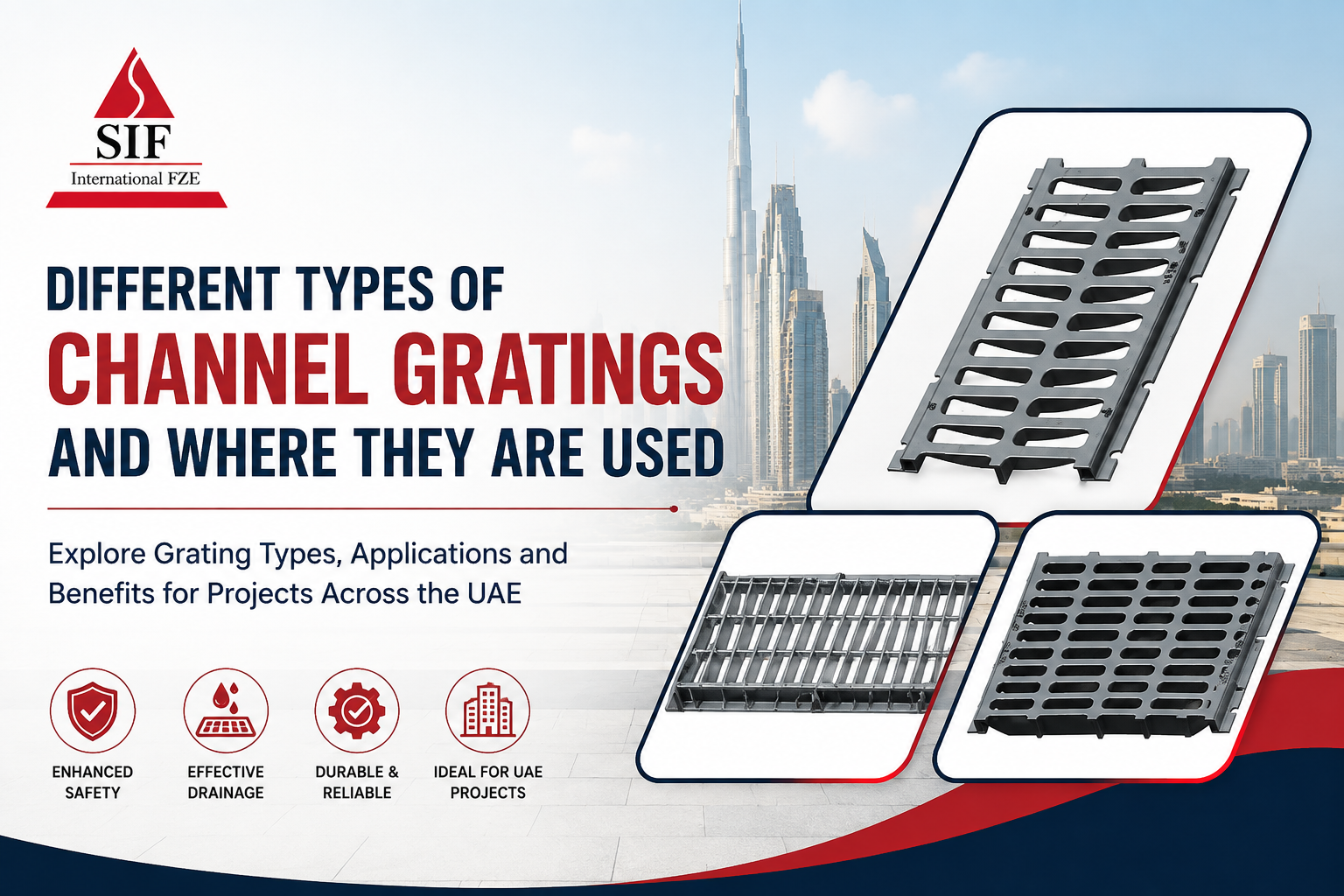
Channel gratings may not be the most noticeable part of a drainage system, but they play an important role in keeping roads, walkways, industrial areas and commercial properties safe and functional. In the UAE, where sudden heavy rainfall can place significant pressure on drainage infrastructure, selecting the right grating is particularly important.
A channel grating provides a protective surface over a drainage channel while allowing rainwater and other surface water to enter the drainage system. The right design depends on factors such as location, expected traffic, load requirements, drainage capacity and the surrounding environment.
For businesses looking for reliable drainage solutions, working with experienced Channel Gratings Suppliers in Dubai can make the selection process easier. SIF International FZE provides industrial and infrastructure solutions designed around practical project requirements and the demanding conditions found across the UAE.
Understanding Channel Grating Designs
Channel gratings are available in different designs, each offering specific advantages depending on where they are installed. Although their basic purpose remains the same, the opening pattern, construction and load-bearing characteristics can vary considerably.
Understanding these differences helps property owners, contractors and project managers select a grating that can provide effective drainage without compromising safety or durability.
Longitudinal Gratings for Efficient Water Flow
Longitudinal gratings feature elongated openings that generally run along the length of the grating. Their design allows surface water to enter the channel while maintaining a relatively clean and streamlined appearance.
These gratings can be suitable for pedestrian areas, walkways, parking facilities and other locations where controlled drainage is required. Their narrow openings can also provide a comfortable surface for people walking across the drainage channel.
The appropriate load class should always be considered according to the intended application. A pedestrian walkway, for example, has very different requirements from a location regularly crossed by heavy commercial vehicles.
Mesh Gratings for Versatile Drainage Applications
Mesh gratings are manufactured with a grid-like arrangement of openings. This structure provides multiple entry points for water while maintaining the strength required for various applications.
They are commonly considered for industrial areas, service zones, plant facilities and other environments where drainage and accessibility need to work together. Depending on the material and construction, mesh designs can also provide good resistance to demanding operating conditions.
For projects in coastal or industrial environments, material selection becomes especially important because exposure to moisture, chemicals and other environmental factors can influence long-term performance.
Diagonal-Slot Designs for Practical Surface Drainage
Diagonal-slot gratings use angled openings rather than straight longitudinal slots. This design can provide an alternative appearance while maintaining the basic drainage function required from a channel cover.
They may be used around commercial developments, pedestrian areas, landscaped spaces and selected architectural applications where drainage needs to blend with the surrounding environment.
The design should be selected according to the actual project conditions rather than appearance alone. Drainage requirements, expected loads and installation conditions should all be evaluated before choosing a particular grating pattern.
Solid Gratings for Areas Requiring Greater Coverage
Solid grating designs have fewer or smaller drainage openings compared with conventional open-pattern gratings. They may be considered for specific applications where surface protection, appearance or controlled water entry is important.
The suitability of a solid design depends heavily on the drainage requirements of the location. Areas that receive substantial quantities of rainwater may require a more open grating design to maintain adequate water intake.
This is why consulting an experienced supplier before finalising the product specification can help prevent unsuitable selections.
Where Are Channel Gratings Commonly Used?
Channel gratings are used across a wide range of residential, commercial, industrial and infrastructure projects. Their application is not limited to conventional roadside drainage.
In the UAE, channel drainage systems can be found around parking areas, pedestrian walkways, commercial buildings, industrial facilities, warehouses, service areas and road infrastructure. They can also be incorporated into landscaping and external areas where surface water needs to be directed towards a drainage network.
For large-scale developments, Channel Gratings Suppliers in Abu Dhabi may also assist contractors and project teams in identifying suitable products based on the location, traffic conditions and drainage requirements.
Why Channel Gratings Matter for Safety and Drainage
A well-designed channel drainage system does more than move water away from a surface. The grating placed over the channel also needs to provide a safe and stable surface for pedestrians and vehicles.
Creating Safer Walking and Driving Surfaces
Open drainage channels can create obvious safety hazards when they are not properly covered. A correctly selected channel grating provides a stable surface while allowing water to pass into the drainage channel.
In pedestrian areas, the size and shape of the openings are particularly important. The grating should be designed so that it does not create unnecessary hazards for pedestrians, wheelchairs, bicycles or other users.
For vehicle-access areas, the load-bearing capacity becomes an even more important consideration.
Reducing the Risk of Drain Blockages
Drainage systems can become less effective when leaves, rubbish, stones and other debris enter the channel. A suitable grating can help prevent larger objects from entering the drainage system while still allowing surface water to pass through.
Regular cleaning and maintenance are still necessary, particularly in outdoor areas. A grating should not be considered a replacement for proper drainage maintenance.
Supporting Consistent Drainage Performance
Good channel drainage should work effectively during normal rainfall as well as periods of increased water flow. The correct combination of channel size, grating design and drainage capacity helps water move away from the surface efficiently.
This is particularly relevant to UAE developments where drainage infrastructure must be planned according to the site’s conditions and expected rainfall patterns.
Helping Minimise Surface Water Accumulation
When surface water cannot enter the drainage network quickly enough, it may accumulate on roads, walkways and other areas. Properly designed channel drainage provides a defined route for water to enter the drainage system.
Choosing the correct grating is therefore part of a wider drainage strategy rather than an isolated product decision.
Choosing the Right Channel Grating for a UAE Project
There is no single channel grating that is suitable for every application. The right option depends on where the grating will be installed and how the area will be used.
Project teams should consider expected traffic, load requirements, drainage volume, channel dimensions, installation conditions and environmental exposure. Material selection is also important in the UAE because outdoor installations may be exposed to heat, humidity, dust and, in some locations, saline conditions.
Working with experienced suppliers can help ensure that the selected product matches the project’s technical requirements rather than simply being chosen based on appearance or price.
SIF International FZE understands the importance of matching industrial products to real-world project conditions. By considering application requirements and installation environments, businesses can make more informed decisions when specifying channel drainage solutions.
Final Thoughts
Channel gratings are an important component of effective surface drainage. From longitudinal and mesh designs to diagonal-slot and solid options, each type can serve different practical requirements.
The best choice depends on the application, expected load, drainage requirements and surrounding environment. For projects across Dubai, Abu Dhabi and other parts of the UAE, selecting products from experienced Channel Gratings Suppliers in Dubai or Channel Gratings Suppliers in Abu Dhabi can help ensure that drainage systems are designed with safety, durability and functionality in mind.
With the right specification and regular maintenance, channel gratings can contribute to safer surfaces, better water management and more reliable drainage infrastructure.
Frequently Asked Questions About Channel Gratings
1. What are channel gratings used for?
Channel gratings are installed over drainage channels to allow surface water to enter the drainage system while providing a covered and accessible surface for pedestrians or vehicles.
2. Which type of channel grating is suitable for heavy traffic?
The appropriate type depends on the required load class and installation environment. Areas exposed to vehicles or heavy equipment generally require gratings designed and tested for the expected load.
3. Are channel gratings suitable for outdoor applications in the UAE?
Yes, channel gratings can be used in outdoor UAE applications, including roads, parking areas, commercial developments and industrial facilities. However, material and finish should be selected according to environmental exposure and project requirements.
4. How do I choose the right channel grating?
Consider the location, expected traffic, load requirements, drainage capacity, channel dimensions and environmental conditions. Consulting a specialist supplier can help identify a suitable specification.
5. Where can I find channel grating suppliers in the UAE?
Businesses can work with established Channel Gratings Suppliers in Dubai and Channel Gratings Suppliers in Abu Dhabi to source suitable products for commercial, industrial and infrastructure projects. SIF International FZE can also be considered when evaluating drainage and industrial product requirements in the UAE.